
How to Get More Google Reviews for Your Window Cleaning Business
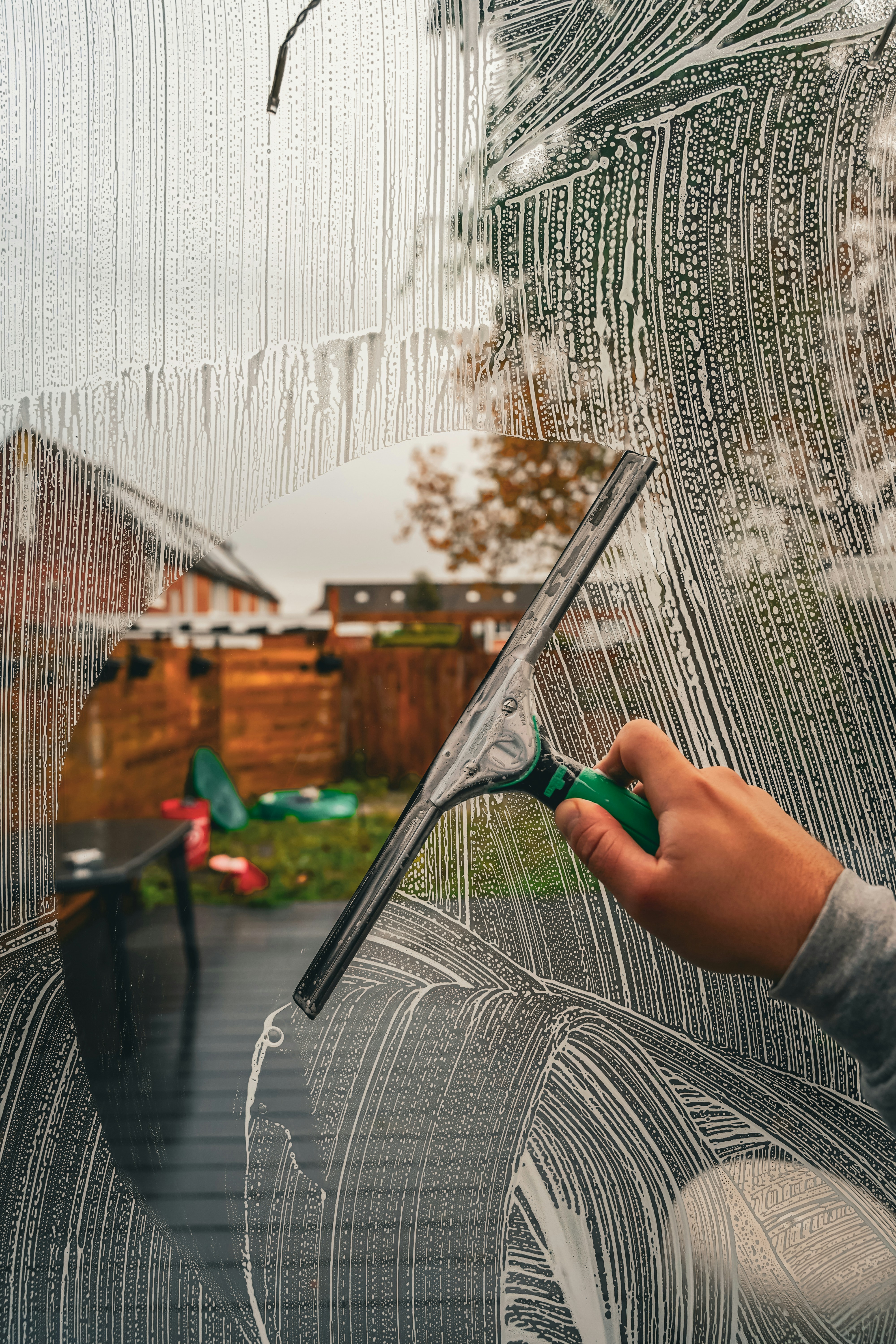
Window cleaning runs on a different math than most home service trades. A roofer might do a handful of jobs a week, each worth thousands of dollars, each one clearly worth an hour of personal follow-up. A window cleaner might do six, eight, ten jobs in a single day, each one worth a fraction of that — a quick exterior wash, a seasonal touch-up, a small residential job that’s done in 45 minutes and paid for on the spot. That volume is good for revenue and bad for review collection, because manually asking every single customer for a review doesn’t scale the way it does for a business closing two big jobs a week. This is the one trade on this list where the system you use to ask matters more than almost anything else.
Why Google reviews matter more for window cleaning than most trades
Window cleaning sits at a lower price point than most of the trades competing for the same searches — “exterior cleaning near me,” “home services,” general handyman-adjacent categories — which means price alone rarely wins the decision. What wins it is the same thing that wins any low-consideration purchase: whichever option looks like the safest, easiest choice with the least research required. That’s almost entirely a function of review count and rating. A homeowner picking a window cleaner isn’t doing deep diligence on a $150 job — they’re glancing at the map pack, picking whoever has the most reviews and a strong rating, and moving on with their day.
The job mix compounds this. Some window cleaning businesses are recurring — quarterly or biannual maintenance clients — but a lot of the volume is one-time or seasonal: spring cleaning, pre-listing house prep, post-construction cleanup. That mix means you can’t rely on a small handful of long-term relationships to carry your review count the way a recurring-service business can. You need a steady stream of reviews coming from a high volume of small, often one-off jobs, which is exactly the scenario manual outreach handles worst.
The best moment to ask
Same-day, right after the job, every time. Window cleaning doesn’t need the “let the emotion settle” logic that applies to bigger jobs, and it doesn’t need the trust-building window a recurring relationship-based trade like house cleaning needs either. These are quick jobs — often done in under an hour — with a clean, obvious before/after (literally: dirty windows, clean windows) and no cooling-off period required. The customer can see the result immediately, they’re satisfied immediately, and the ask should happen immediately, before they’ve mentally moved on to the rest of their day.
Because there’s no complexity to the timing — no emotional window to time carefully, no waiting for the “right” moment — the entire problem collapses into one thing: doing it consistently, for every job, at the volume window cleaning actually runs at. That’s a process problem, not a timing problem.
Example request text
Same-day, right after a standard residential wash:
Hey Steph, it’s Marco with Crystal Clear Window Co — thanks for having us out today for the exterior wash! If you have a quick second, we’d really appreciate a Google review: [link]
Same-day, after a quarterly recurring client’s visit:
Hi Steph, Marco again — windows are looking great as always. If you don’t mind, a quick review helps other folks in the neighborhood find us: [link]
Both are short and low-friction on purpose — this isn’t a job that calls for a long, detailed message, and a short text matches the size and speed of the job itself. The recurring version references the ongoing relationship briefly (“as always”) without turning it into a big ask, since a quarterly client doesn’t need to be sold on trust the way a first-time house cleaning client does — the relationship already speaks for itself.
For more request language across different scenarios, see our text message examples.
The objection: “The job value is too small to spend time chasing reviews for each one”
This is a real constraint, and window cleaning owners aren’t wrong to raise it — the math genuinely doesn’t work if “chasing reviews” means someone manually texting or calling every single customer after every job. At ten jobs a day, that’s real time spent on something that isn’t billable, for jobs that individually don’t justify much follow-up effort.
But that’s the case against doing it manually, not the case against doing it at all. The actual fix is recognizing that the cost of asking should scale with the method, not the job size. A manual review request costs you a few minutes of somebody’s time no matter what the job was worth — which is why it doesn’t make sense to do by hand at high volume. An automated review request costs close to nothing per job, whether the job was a $95 touch-up or a $400 whole-house exterior clean. The marginal cost problem that makes manual outreach a bad fit for high-volume, low-ticket work disappears entirely once the ask itself is free to send. The volume that makes review-chasing feel not worth it by hand is the same volume that makes automation pay off fastest — more jobs means more chances to ask, at zero additional cost per ask.
What this looks like without manual follow-up
Given the job volume window cleaning runs at, this is arguably the trade on this list where manual review requests are least sustainable and automation matters most. Ten jobs a day, five days a week, is fifty opportunities to ask for a review every week — more than almost any other trade generates — but only if something is actually sending the ask each time, since nobody’s reliably doing that by hand at that pace.
Review River automates this: a 5-touch sequence (2 texts, 3 personalized photo emails with the customer’s name on the image) fires automatically the moment a job is marked complete, so every job — the $95 touch-up and the $400 whole-house job alike — gets the same consistent ask without anyone needing to remember to send it. For the full picture on why timing and consistency matter this much, see our complete guide to getting more Google reviews. If you’re building review count from a standing start, our 30-day review sprint covers running a concentrated push through your past customer list.
If your crew also handles pressure washing on the same properties — a common pairing, since both are exterior cleaning services often sold together — the one-time-job urgency covered in our pressure washing review guide is worth reading too, since that trade runs on a very different ask-window than window cleaning’s high-volume, same-day rhythm.
The bottom line
Window cleaning doesn’t have a complicated timing problem — ask same-day, every time, no exceptions needed. What it has is a volume problem: too many small jobs for manual outreach to keep up with, which makes automation less of a nice-to-have here than in almost any other trade on this list, since the marginal cost of asking barely changes whether you’re sending one request a day or fifty.
Want to see this running automatically on your own job list? Review River’s 14-day trial lets you watch the requests go out before you pay a dollar — no contract, nothing for you to set up.