
How to Get More Google Reviews for Your Roofing Business
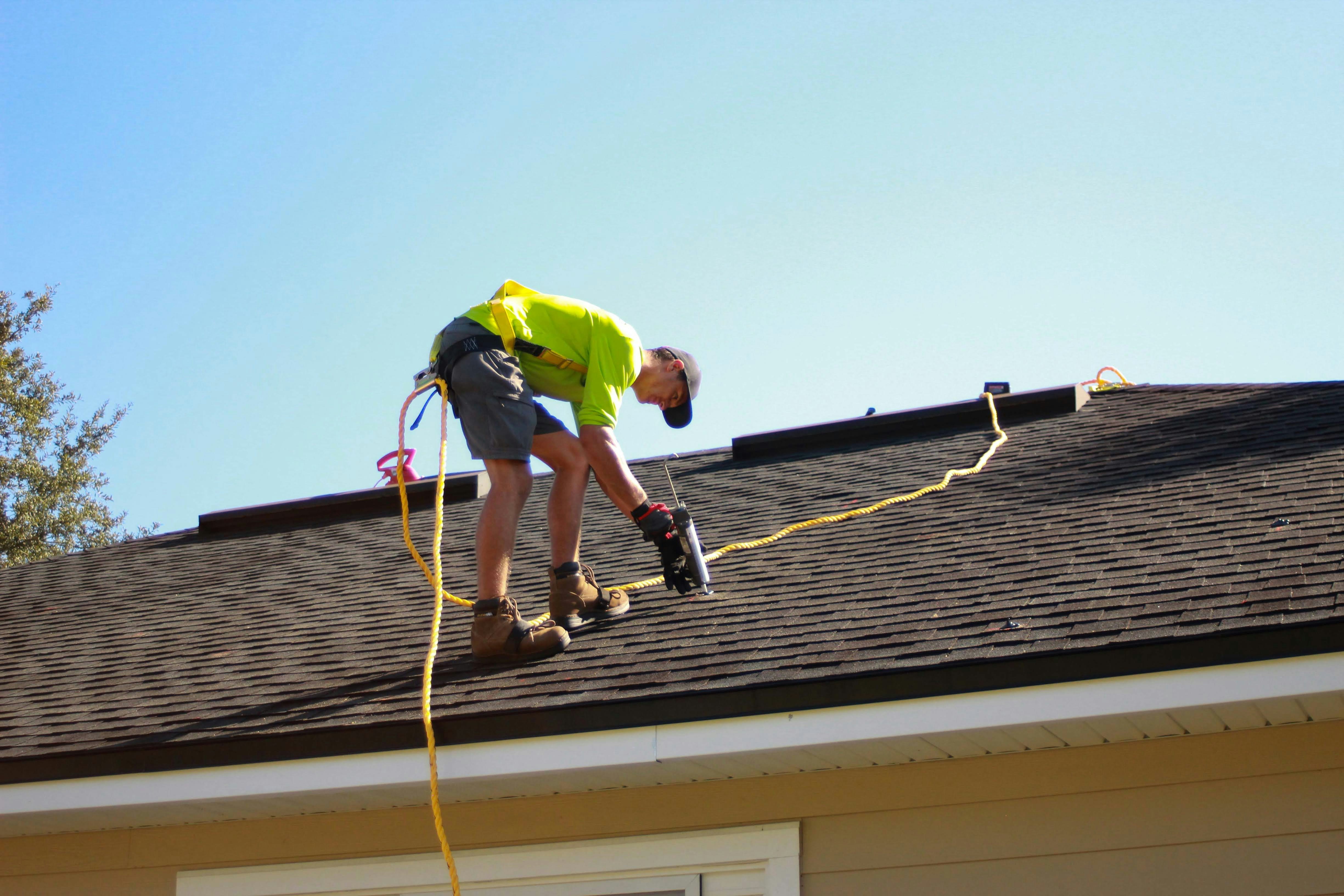
For most homeowners, a new roof is the single largest expense they’ll ever put on their house — bigger than a kitchen remodel, often bigger than the car in the driveway. That kind of purchase gets researched harder than almost anything else a local service business sells. And unlike HVAC or plumbing, where a homeowner might have an existing relationship with a company from a past repair, roofing customers are frequently first-timers with zero prior connection to anyone in the trade — especially after a storm, when a whole neighborhood suddenly needs a roofer at the same time and almost none of them have ever hired one before.
That combination — high dollar amount, high research effort, and a customer base with no existing loyalty to lean on — is what makes review count and recency the single biggest lever roofers have for winning new business.
Why reviews matter more after a storm
Hail and wind events create something roofing companies see and few other trades do: a sudden surge of searches from people who’ve never thought about roofing before and now urgently need to. Every roof in the affected area gets inspected within weeks, and every homeowner who needs work done starts searching cold, at the same time, in the same neighborhood.
That surge also draws storm-chasing crews — companies that show up after a big hail event, work the neighborhood hard for a few months, then leave town once the insurance money dries up. Homeowners have gotten wise to this pattern, and it changes what they look for: not just a good rating, but a review count and posting history that shows a real, established local company rather than an outfit that appeared out of nowhere the week after the storm. Recent reviews spread out over months or years read as legitimate. A cluster of reviews all posted in the same three-week window reads as exactly what it is.
This means the weeks after a storm are when your review profile does the most work — and also when it’s hardest to build quickly if you haven’t been building it steadily beforehand. A roofer with a strong, long-running review history walks into that surge with an obvious advantage over both local competitors and the chasers who just rolled into town.
The best moment to ask
Most trades should ask right after the visible work wraps. Roofing is the exception, and the reason is specific to how the job actually ends for the customer: when insurance is involved, the physical roof install is often not the end of their experience with you. Claim documentation, adjuster back-and-forth, supplement requests, and final payment can drag on for weeks or months after the crew has already packed up and left.
If you ask for a review the day the roof goes on, you’re asking before the customer’s actual experience with your company is over — and if anything goes sideways in the insurance process afterward (a delayed supplement, a confusing invoice), you’ve already banked a review that might not reflect how they feel once everything’s settled. Wait until the claim closes and final payment clears. That’s the true end of the relationship from the customer’s side, and it’s also the moment of maximum relief — the whole ordeal, not just the roofing part, is finally behind them.
Use the photos you already have
Roofing is unusually photo-friendly compared to most trades. Drone before-and-after shots are common practice, and most roofers already send them to the homeowner during the job — the transformation is dramatic and easy to show. That makes roofing review requests a natural fit for referencing the photos directly: reminding the customer of the shots they already saw makes the ask feel specific and grounded in their actual experience, not like a generic template blasted to every closed claim.
Example request text
After insurance claim closeout and final payment:
Hi Patricia, this is Danny from Summit Roofing — glad we got everything squared away with your insurance company and the new roof is fully paid off. Remember those drone before-and-after shots we sent you? If you have a minute, we’d really appreciate a quick Google review: [link]
After a smaller, non-insurance repair (cash job, faster close):
Hey Bill, thanks for having us out to patch that flashing before it caused any water damage. If you don’t mind, a quick Google review helps other folks in the area find someone they can trust with their roof: [link]
The first example ties the request to the actual milestone that matters — claim closeout, not the day the shingles went on — and references the photos already shared, which most roofers overlook as a hook. The second, for simpler cash jobs without insurance involved, can move faster since there’s no claim process stretching out the timeline.
For more request language you can adapt across scenarios, see our text message examples.
The objection: “Insurance claims take months, by the time it’s done the customer has moved on”
This is the most common reason roofers give for skipping the review ask entirely, and it’s actually the strongest argument for automating it rather than a reason not to bother. It’s true that manually remembering to follow up with a customer three or four months after the crew left — after dozens of other jobs have come and gone in between — is exactly the kind of task that gets forgotten. Nobody’s checking a spreadsheet in October for a claim that closed from a March job.
But “manual follow-up gets forgotten months later” is a process problem, not a reason the review isn’t worth getting. A system that watches for claim closeout and triggers the request automatically doesn’t have the same memory problem a person does. The gap between job completion and claim closeout is exactly why roofing needs automated timing more than almost any other trade in this list — the delay is real, but it’s a scheduling problem, not a reason to give up on the review.
What this looks like without manual follow-up
Tracking insurance claim status across every open job, remembering to circle back once each one closes, and wording the request around photos sent months earlier is a lot to manage by hand, especially across a full pipeline of storm-season jobs. Review River triggers the request off the actual completion event in your CRM — a 5-touch sequence of 2 texts and 3 personalized photo emails, sent automatically once the job (and the claim, where applicable) is marked done, with the customer’s name on the image every time. For the full picture on sequencing and why it beats a single generic ask, see our complete guide to getting more Google reviews.
Storm damage often hits more than just the roof — hail can take out an outdoor AC condenser in the same event — so the same review-timing logic applies on that side of the job too; see how to get more Google reviews for HVAC companies.
Curious how many reviews it actually takes to show up in your local map pack? See how many Google reviews you need to rank.
The bottom line
Roofing customers are making one of the biggest purchases tied to their home, often for the first time, often right after a storm has put dozens of competitors in front of them at once. Review count and recency are what separate a real local company from a crew that’ll be gone by fall. Ask at the real end of the relationship — claim closeout, not shingle install — and let the photos you already sent do some of the persuading.
Want to see this running automatically on your customer list? Review River’s 14-day trial lets you watch the requests go out before you pay a dollar — no contract, nothing for you to set up.