
How to Get More Google Reviews for Your Mobile Mechanic Business
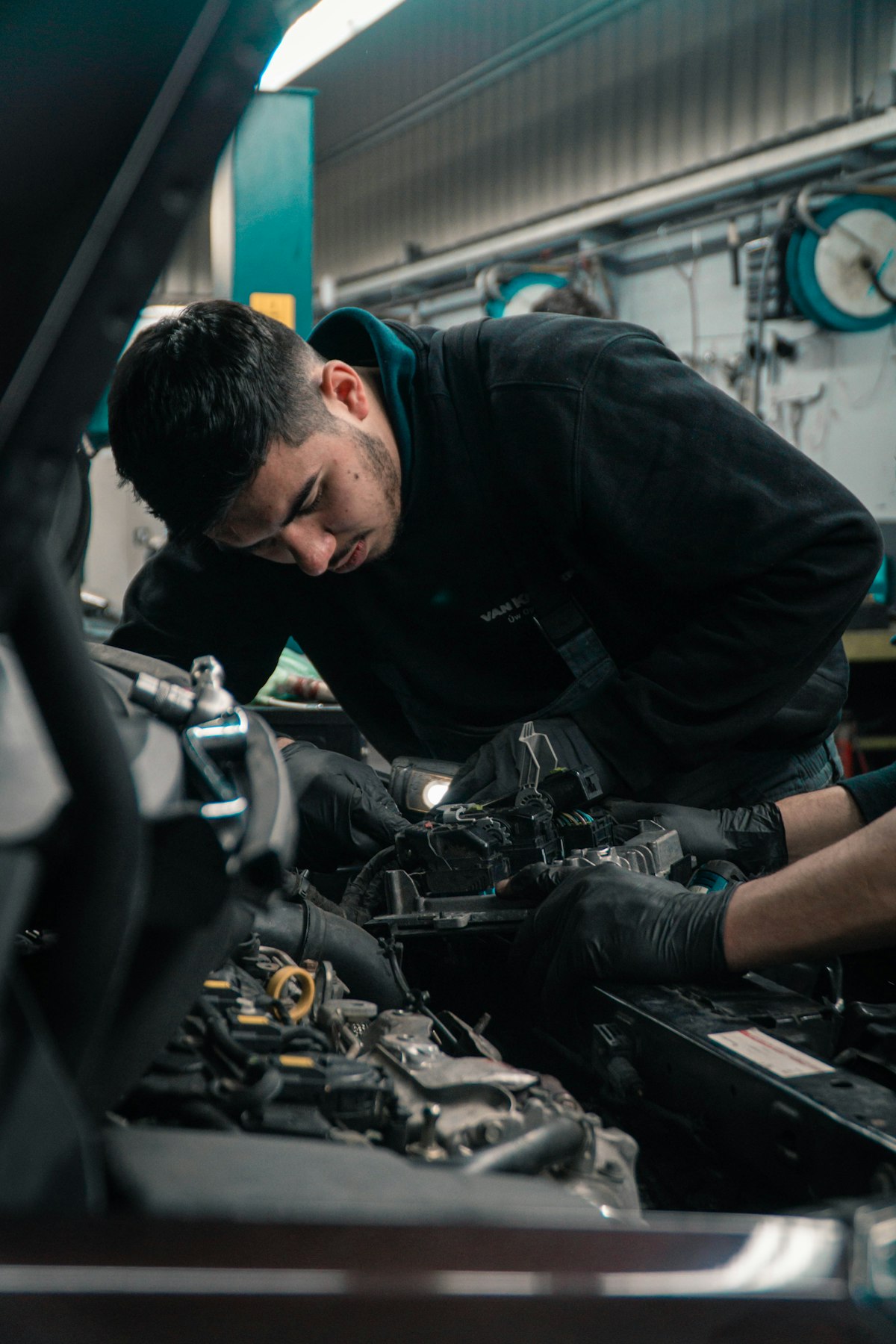
A traditional shop has a building, a sign, a lot full of cars — physical proof it’s a real business before a customer ever reads a single review. You don’t have that. You show up in someone’s driveway with a toolbox, do the work, and leave. Everything a stranger knows about whether you’re legitimate has to come from somewhere else, and for most people searching “mobile mechanic near me,” that somewhere else is your Google reviews.
That’s not a weakness to work around. It’s actually the opening. Mobile mechanic is a newer category than traditional auto repair, which means the review bar most competitors have cleared is lower — a shop that’s been open for 15 years can have 200+ reviews just from being around that long, but the mobile mechanic operating in the same city might only be up against a handful of listings with a dozen reviews each. Build a real review system early and you can out-rank the established competition faster here than in almost any other trade on this list.
Why reviews carry more weight when you have no storefront
Every other business a customer might compare you to has some kind of physical trust signal — a location they can look up on a map, a building that’s clearly been operating for a while, other cars in the lot suggesting real customers. You don’t have any of that. No storefront means Google reviews aren’t just one signal among several — for a mobile mechanic, they’re close to the only signal a stranger has to decide whether to let you into their driveway.
That changes what “enough reviews” means for you compared to a shop. A shop with 15 reviews can lean on the building and the years-in-business as backup. You can’t. Fifteen reviews is often the entire case a potential customer has to work with, which is exactly why building review count early matters more here than it does for almost any other trade — it’s not padding your profile, it’s building the only proof you have.
The upside is real too: because the category is newer and less saturated with reviews overall, the review count needed to jump ahead of the competition in your area is usually lower than what it’d take to out-rank an established shop with decades of accumulated reviews. You’re not trying to out-review a business that’s been collecting them since 2009. You’re often just trying to out-review three or four other mobile operators who haven’t built a real system either.
The best moment to ask: right after the job, before you leave
For a mobile mechanic, the window to ask is tighter and more literal than it is for a shop. You’re standing in the driveway. The customer just watched you fix their car in real time, in their own space, without them having to arrange a ride or wait around a shop lobby. That relief and convenience is at its peak the moment you’re packing up your tools — not an hour later, not after you’re back on the road.
Ask before you leave, or send the text within minutes of pulling out of the driveway. The alternator you just swapped out, the check engine light that just turned off — all of it is still fresh, visible, and directly tied to you personally, because there’s no shop name buffering the experience. It was just you and them. That directness is worth using while it’s still immediate.
If you’re not comfortable asking face to face, an automated text sent the moment you mark the job complete on your phone captures the same window without making it an awkward in-person ask — which matters, since mobile mechanic work is often more personal and one-on-one than a shop visit, and some techs would rather not turn the goodbye into a sales pitch.
A real example request text
Hey Sarah, it’s Jake — thanks for letting me handle that alternator right in your driveway today. Saved you the tow and the shop wait. If you’ve got a minute, a quick Google review helps other folks nearby find a mobile mechanic they can actually trust to show up: [link]
This works because it names the specific job and the specific convenience — no tow, no shop wait — instead of a generic “thanks for your business.” It also leans into the exact thing a stranger reading it would want to know: can I trust this person to show up at my house and do real work. That’s a different question than “is this shop good,” and the review request should speak to it directly. For more starting points across different scenarios, see our text message examples.
The objection: “They already trust me — I’m standing in their driveway”
This is the objection mobile mechanics raise more than almost anyone else, and it makes sense on the surface: you just spent 45 minutes at someone’s house, they watched you work, they handed you cash or a card directly. Of course they trust you. Why would you need an online review on top of that?
Because that trust doesn’t transfer. The customer standing in front of you built that trust in real time, watching you work — but the next customer, the one searching “mobile mechanic near me” at 9pm because their car won’t start, has never met you and never will before deciding whether to book. They can’t watch you work before they call. All they have is your profile, your rating, and whatever the reviews say. The in-person trust you earned today is real, but it’s locked to the person who experienced it. It doesn’t travel with your business name to the next search.
This is actually a bigger issue for mobile mechanics than for shops, not a smaller one. A shop customer at least drives past the building, sees the sign, maybe glances in the window before calling. A mobile mechanic customer has no equivalent — no drive-by, no storefront, nothing except your online presence standing in for the driveway visit they haven’t had yet. The trust you build in person is genuine, but it dies with that appointment unless you turn it into something the next stranger can see.
What this looks like automated
Between drive time, the actual repairs, and getting to the next job, remembering to text every customer and following up with the ones who don’t respond is the first thing that falls off — and unlike a shop, you don’t have a front counter or a receptionist to catch it for you.
Review River sends the sequence automatically the moment a job’s marked done: two texts and three personalized photo emails, spaced out over the following days, with your customer’s name on the photo so it doesn’t read like a mass blast. No app to check between jobs, nothing to remember mid-driveway.
If some of your work overlaps with shop-based repair — say you also take walk-ins at a home garage — the trust dynamics shift a bit; see how review requests work for auto repair shops for that angle. And for the full mechanics of timing and sequencing, our complete guide to getting more Google reviews covers it in depth.
Want to see it running on your own customer list? Review River’s 14-day trial lets you watch the requests go out before you pay a dollar — no contract, nothing to set up yourself.