
How to Get More Google Reviews for Your Lawn Care Business
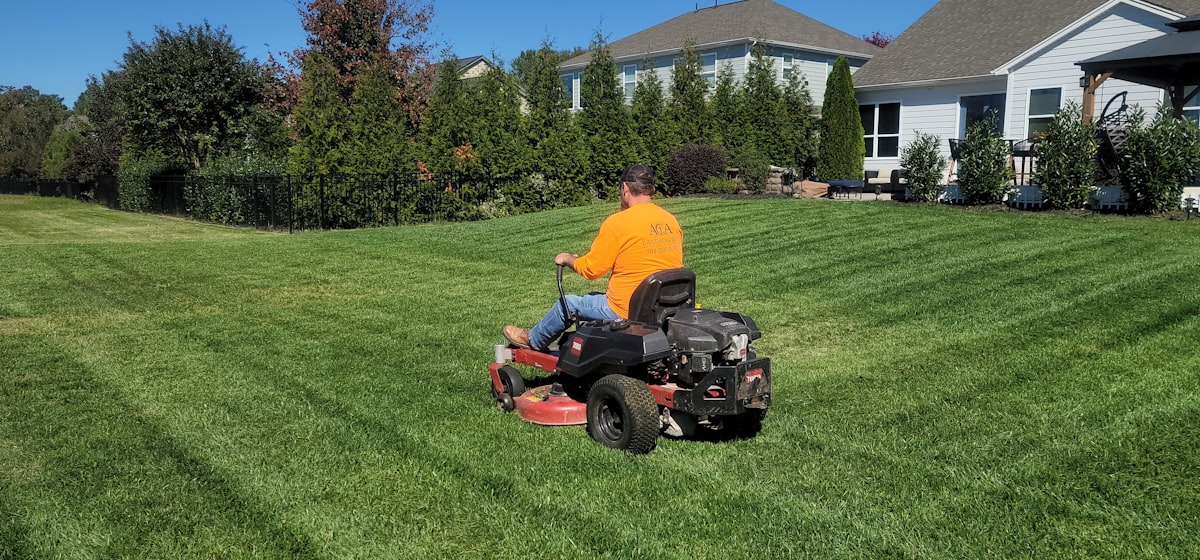
Most trades get one shot at a customer per job. A lawn care company gets one shot roughly every seven to fourteen days, for months at a time, for the same customer. That’s a completely different math problem than a roofer or a tree company faces, and it changes how the review ask should work — not whether to ask, but how often and at which visits.
The mistake most lawn care owners make isn’t asking too rarely. It’s assuming that because they see the customer constantly, a review will happen naturally, eventually, without anyone having to do anything about it. It almost never does.
Why frequency is both the advantage and the trap
A typical lawn care account generates twenty, thirty, sometimes forty visits a season. Compare that to a tree removal or a roof replacement, where you get exactly one shot at the review ask because there’s exactly one job. Lawn care has dozens of touchpoints per customer per year — which should mean dozens of chances to ask for a review.
But that same frequency is why most lawn care companies end up with surprisingly few reviews relative to how many customers they actually have. When you see someone every week, no single visit feels like the obvious moment to bring up a review. It’s not a big event. It’s Tuesday, and you mowed the lawn like you did last Tuesday, and the Tuesday before that. Nothing about a routine mow signals “this is the moment to ask.” So owners keep meaning to get around to it and never do, visit after visit, for the entire season.
The fix isn’t asking after every mow — that would actually hurt you. Nobody wants a review request texted to them every single week from the same lawn company; it reads as spam fast and burns trust with your best customers. The fix is picking specific, meaningful moments inside that recurring relationship and asking then, instead of treating every visit the same or never treating any visit as the moment.
The moments that actually work
A few points in the season stand out as real ask opportunities, because they’re the moments a customer actually notices and feels good about, not just another routine stop:
First cut of spring. The yard’s coming back to life after winter, first-mow-of-the-year satisfaction is real, and the customer is actively thinking about lawn care again after months of not thinking about it at all.
A full season completed. Around the customer’s anniversary with you, or as the season winds down — a natural “we’ve been taking care of this all year” moment that a single weekly visit doesn’t carry on its own.
A specific visible-results service. Aeration, overseeding, fertilization treatments that show up in a few weeks as a noticeably greener or thicker lawn. When a customer can visibly see the difference a treatment made, that’s a much stronger review moment than a routine mow, because there’s an actual before-and-after they can point to.
A problem solved. Grub damage cleared up, a bare patch filled back in, a weed problem finally under control after a few rounds of treatment. Same logic as any other trade — resolution is when gratitude peaks, not the ongoing maintenance in between.
That’s a handful of real ask opportunities across a season, not one shot and not fifty. Spaced out that way, the ask never feels repetitive, and each one lands at a moment the customer is actually paying attention to the lawn instead of just seeing the truck pull up on autopilot.
The objection: “we already have a great relationship with our regulars”
This comes up constantly with lawn care owners, and it’s worth addressing directly because the logic sounds reasonable and is actually backwards: “My regulars already love us, it feels unnecessary to ask them for a review.”
Flip it around. Regulars are exactly the customers most likely to write you a genuinely strong review — they’ve seen the work over months or years, they trust you, and they have real detail to write about instead of a one-time impression. They’re also, almost without exception, the customers who get skipped, because owners assume “they’ll leave one eventually” or “I’ll get to asking them next time I see them.” Next time never quite arrives, because there’s always a next time after that.
Meanwhile, the reviews that would carry the most weight — long-term customers describing a company that’s shown up reliably for two or three years — never get written, while newer, thinner reviews from one-off jobs end up carrying the profile instead. The best reviews you’re not getting are sitting in your own customer list, in accounts you’ve had the longest.
What to actually send
Here’s an example tied to the first-cut-of-spring moment:
Hey Brian, this is Tyler with [Company] — got your first cut of the season done today, yard’s looking sharp for spring. Appreciate you sticking with us again this year. If you’ve got a sec, a quick Google review would help other folks in the neighborhood find us: [link]
And one tied to a visible-results service, which tends to convert even better because there’s something specific to point to:
Hi Amanda, following up on the aeration and overseeding we did a few weeks back — that new grass should really be filling in now. If you’re happy with how it’s looking, we’d appreciate a quick review: [link]
For a long-time regular at the end of a season:
Hey Mike, wrapping up another season with you — thanks for being a customer for going on three years now. If you’ve never left us a review, we’d genuinely appreciate one whenever you get a minute: [link]
Notice none of these get sent after a routine weekly mow. Each one is tied to something the customer would actually notice — a seasonal shift, a visible result, or the length of the relationship itself. For more on wording and timing that applies across trades, see our text message examples.
Why this needs a system, not a memory
The core problem with lawn care review requests isn’t lack of opportunity — it’s volume. If you’re running 150 accounts, keeping track of which customers just had their first spring cut, which ones finished an aeration treatment two weeks ago, and which regulars haven’t been asked in two years isn’t something anyone can hold in their head while also running routes and managing crews. It gets skipped not because owners don’t care, but because there’s no consistent moment where “ask this account” surfaces on its own.
That’s the actual argument for automating it around specific triggers instead of leaving it to memory: a system that knows which visit was the first cut of the season, which was the aeration follow-up, and which accounts have been active a full year can fire the right ask at the right moment for every customer, without anyone on your team having to track it manually. If asking still feels awkward for your crew even with the right timing, this guide on asking without it feeling forced covers the reframe that usually fixes it.
Lawn care customers overlap heavily with pest control too — the same homeowner asking neighbors who handles their yard is often asking who handles their bug problem in the same breath. If you’re thinking about review strategy across both, our guide on Google reviews for pest control companies covers a very different timing problem: privacy and discretion instead of ask-frequency.
The bottom line
Lawn care doesn’t have a shortage of review opportunities — it has too many to treat them all the same, and too many owners defaulting to asking never instead of picking the moments that actually matter. Anchor the ask to first cut of spring, visible-results services, problems solved, and season milestones, and stop assuming your best customers will get around to it on their own, because they usually won’t unless something specific prompts them.
For the full picture on timing, sequencing, and how many reviews you need to actually move your map pack ranking, see our complete guide to getting more Google reviews.
If you’d rather not track which account just hit which milestone across your whole customer list, Review River’s 14-day trial handles it automatically — you watch it run on your own customer list before you pay a dollar, no contract required.