
How to Get More Google Reviews for Your Electrical Business
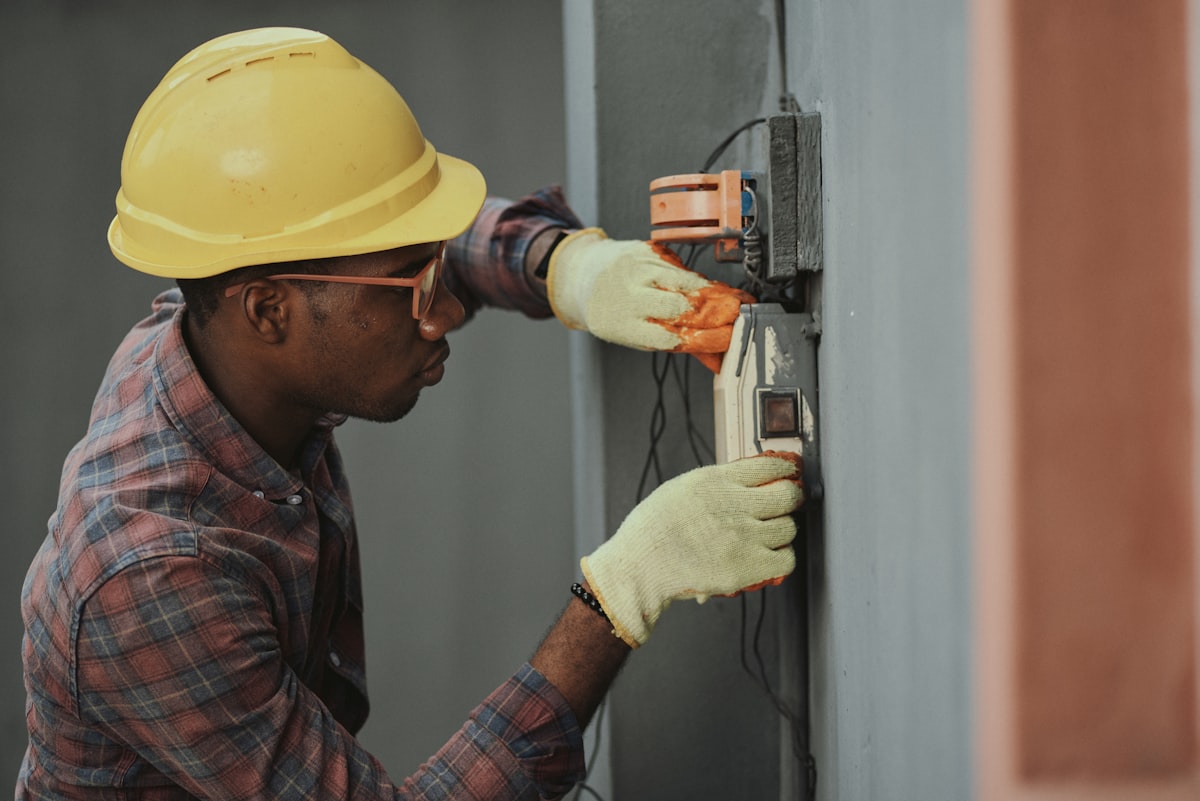
A leaky faucet is an inconvenience. Bad electrical work is a fire risk. That difference in stakes is why electricians need more trust signals than almost any other trade — a customer isn’t just hiring someone to fix a problem, they’re hiring someone to work inside their walls with something that can genuinely hurt their family if it’s done wrong. Most homeowners can’t evaluate electrical work themselves. They can’t tell a correctly torqued breaker from a fire hazard by looking at it. So they lean entirely on secondhand signals to decide who’s trustworthy enough to let in, and reviews are the loudest one available.
That’s the angle this article is built around: not “reviews are nice to have,” but reviews carry more weight per decision in electrical than they do in lower-stakes trades, and the moment you ask for one needs to match when the customer actually feels safe, not just when the visible work is done.
Why reviews matter more for electrical than most trades
Think about what a customer is actually judging when they hire an electrician. It’s not just “will this get fixed” — it’s “will this person do something inside my walls that could burn my house down.” That’s a heavier question than almost anything else a homeowner hires a contractor for, and it makes people disproportionately cautious. They’ll read more reviews, read them more carefully, and specifically look for language about safety, code compliance, and whether the work passed inspection — not just whether the electrician was friendly and showed up on time.
This also means a thin review profile hurts electricians more than it hurts other trades. A landscaper with 5 reviews is a minor risk — worst case, the lawn looks bad for a season. An electrician with 5 reviews is asking a stranger to trust them with something genuinely dangerous, with almost no evidence to go on. Building review volume isn’t just about ranking in the map pack for electricians — it’s about clearing a higher bar of perceived risk before someone will even consider calling.
The best moment to ask
For most trades, the right moment is right after the visible work wraps. For electrical, that’s actually too early. Here’s why: a customer whose panel just got upgraded or whose new circuits just got installed doesn’t feel like the job is truly done and safe until it passes inspection. The electrician packing up their tools and leaving isn’t the finish line in the customer’s mind — the inspector’s sign-off is. Ask before that happens and you’re asking for a review of work the customer isn’t fully confident in yet, even if the work itself is completely fine.
Wait for the permit to close and the inspection to pass, then ask. That’s the actual moment the anxiety resolves — not “someone did electrical work in my house” but “someone did electrical work in my house and it’s confirmed safe.” That confirmation is what turns a nervous customer into a confident one who’s willing to vouch for you publicly.
This matters more for panel upgrades, rewires, and anything requiring a permit than for smaller jobs like a light fixture swap that doesn’t go through inspection — for those, the standard right-after-the-job timing still applies.
Example request text
After permit sign-off on a panel upgrade:
Hi Janet, this is Carlos from Bright Line Electric — good news, your panel upgrade passed inspection, so everything’s officially signed off and safe. If you have a minute, we’d really appreciate a quick Google review: [link]
Right after a same-day fixture job (no permit involved):
Hey Marcus, thanks for having us out today to get that fixture installed. If you don’t mind, a quick Google review helps other folks in the area find someone they can trust with electrical work: [link]
The first text explicitly references the inspection passing — that’s the actual relief moment for a panel upgrade, not just “thanks for the job.” The second, for smaller non-permitted work, keeps the standard same-day approach but still nods to the trust angle that matters specifically for electrical.
For more request language you can adapt, see our text message examples.
The objection: “Electrical work isn’t something people research online, it’s word of mouth”
This is the most common pushback electricians give, and it was true twenty years ago in a way it isn’t anymore. Word of mouth hasn’t disappeared — it’s just changed shape. When a neighbor recommends an electrician, the person hearing that recommendation doesn’t call blind off a name. They Google the company first, because a name from a friend is still a stranger who’s about to work inside their walls with something dangerous, and they want to see evidence before they call — recent reviews, a real rating, some sense that other people had a safe experience.
So the referral doesn’t replace the search anymore. It starts it. If your Google profile looks thin or stale when that referral turns into a search, you can lose a job you were already recommended for, simply because the online evidence didn’t back up what the neighbor said. Reviews aren’t competing with word of mouth for electricians — they’re the thing that confirms word of mouth before someone will actually pick up the phone.
What this looks like without manual follow-up
Waiting for inspection sign-off instead of asking right after the visible work means tracking permit status alongside job completion — a second thing to remember on top of the actual electrical work, and exactly the kind of detail that gets missed when you’re running a full schedule. Ask too early and the request lands before the customer feels settled. Forget to ask once the permit clears and the moment passes entirely.
Review River handles this by triggering the request off job completion in your CRM, timed to the moment that actually matters for the type of work done — a 5-touch sequence of 2 texts and 3 personalized photo emails, sent automatically with nothing for you to track by hand. For the mechanics of why timing and sequencing this way outperforms a single generic ask, see our complete guide to getting more Google reviews.
Panel upgrades often come up alongside HVAC installs — a new AC or heat pump can require added electrical capacity — so the same trust-timing logic applies on that side too; see how to get more Google reviews for HVAC companies. Water heater installs are another common overlap; see how to get more Google reviews for plumbers.
Want to know how many reviews it actually takes to rank in your local map pack? See how many Google reviews you need to rank.
The bottom line
Electrical work carries more inherent risk in a customer’s mind than most trades, which means reviews do more persuading per decision than they do elsewhere. Ask at the wrong moment — before inspection confirms the work is actually safe — and you’re asking for a review the customer isn’t fully ready to give. Ask right after sign-off, when the anxiety has genuinely resolved, and you’ll get a stronger, more confident review that does real work for the next nervous customer deciding whether to trust you.
Want to see this running automatically on your customer list? Review River’s 14-day trial lets you watch the requests go out before you pay a dollar — no contract, nothing for you to set up.